
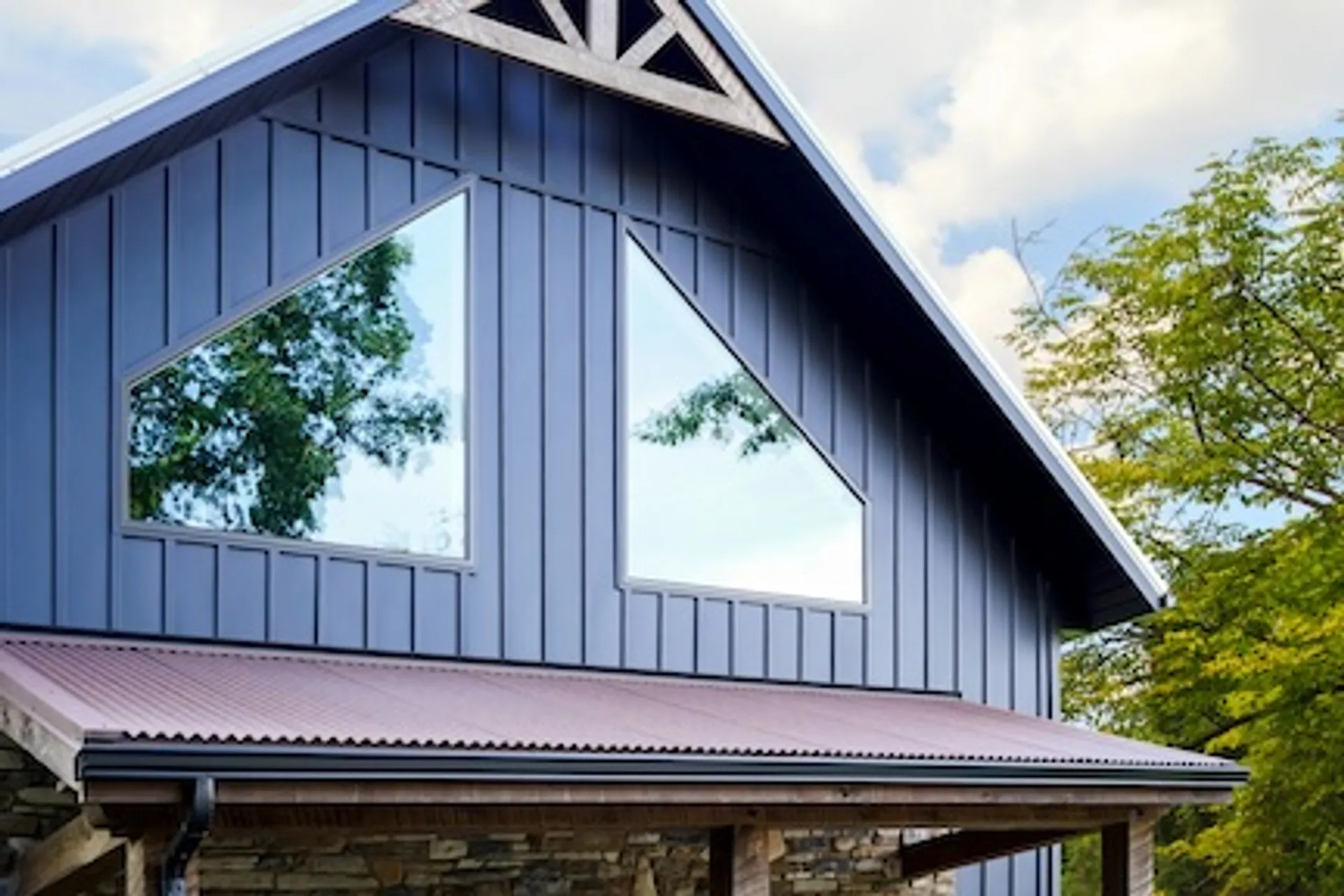
Best for: Architectural accents; arched, circular, or angled openings
Arches, half-rounds, circles, octagons, trapezoids, and the angled units that follow a gable or a stair run. Anything that isn’t a rectangle.
When a specialty window is the right choice
Usually you don’t choose it — the house does. If there’s an arched transom over your entry or a triangular unit following a cathedral ceiling, the shape is already set by the architecture, and the decision is whether to replace it or leave it.
Worth knowing: these are often the worst-performing windows in the house. Specialty units in older homes are frequently single-pane, frequently original when everything else has been replaced, and frequently in the highest positions where heat collects. A homeowner who replaced every rectangular window a decade ago and left the arched transoms often has a measurable amount of loss concentrated in a small amount of glass.
They’re also often the units people assume can’t be replaced. They can.
What’s different about installing a specialty window
Measurement is unforgiving and there’s no margin to correct. A rectangular unit that’s slightly off can sometimes be adjusted in the opening. An arch that’s off is scrap — the radius either matches the opening or it doesn’t, and a replacement is another full manufacturing cycle.
That’s why these get templated rather than measured with a tape. For a true arch or an irregular shape, the opening gets a physical or digital template so the unit is built to the actual curve, not to a stated radius that assumes the original was built accurately. Old arches very often aren’t a true radius at all.
Access is the second factor. Specialty units live in gables, above stair landings, in cathedral ceilings — high, awkward, and frequently needing staging or lift equipment. That affects the schedule and it needs to be identified at the measure, not on install day.
Flashing a non-rectangular head is harder than a flat one. Water management around a curve requires more care than a straight head flashing, and it’s an area where shortcuts are invisible and consequential.
What we install
ProVia custom shapes built to your openings — half-rounds, full circles, ellipticals, octagons, triangles, trapezoids, and combinations. Available as fixed units or, in some shapes, operating. Glass packages and colors match the rest of your project so a specialty unit doesn’t read as an afterthought.
.ggORiFmD_PXadk.webp)